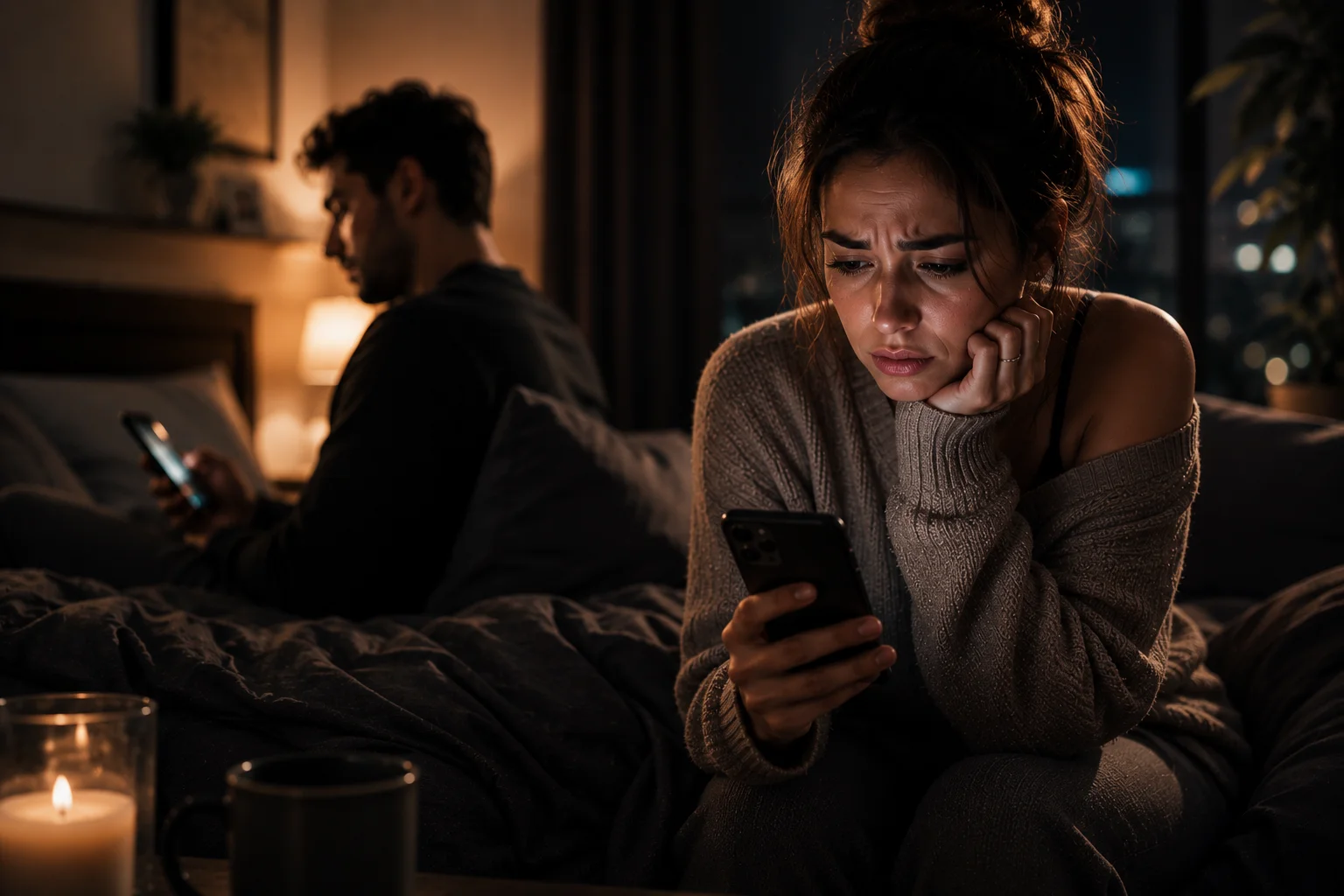
By some estimates, as many as one in three relationships is touched by some form of cheating. That is the hard news. The better news is that infidelity is far more predictable than people think, because it rarely comes out of nowhere. The warning signs are usually there long before anything happens, quietly hiding in plain sight.
Before we go any further, one thing has to be said clearly, because this topic is painful for anyone who has already been betrayed. Cheating is never your fault. It is not a mistake, it is not an accident, and it is not something a relationship "makes" someone do. It is a self centered choice, and the person who makes it owns it completely. Far too many people who have been cheated on get handed the blame for someone else stepping out, and that is simply wrong. You are also never obligated to give a second chance, no matter how sorry someone is or how much work they promise to do. Choosing to leave for your own emotional health is allowed, full stop.
With that said, here are seven of the strongest predictors that raise the risk of betrayal in a relationship, so you can recognize them with clear eyes.
1. Self-centeredness and a streak of narcissism
If your partner is arrogant, entitled, rarely thinks about how their words and actions land on other people, and has little interest in resolving conflict respectfully, the odds of cheating climb. Healthy relationships run on a quiet kind of generosity. They ask both people to set ego aside sometimes for the sake of the other person, without abandoning their own needs entirely.
Self centered people tend to feel entitled to a partner's body and attention. When they don't get what they want, they sulk, guilt trip, or punish, and they can feel weirdly justified going to find validation elsewhere. Underneath the arrogance is usually insecurity that constantly needs feeding. None of this means you caused anything by choosing them. It means you deserve someone who values your feelings and genuinely wants to build trust with you.
2. They keep putting themselves in compromising situations
Some people create the exact conditions for a slip, then act shocked when it happens. Getting drunk on a work trip with the coworker they have always found attractive. Losing control through substances. Walking into environments built around temptation and telling themselves it will be fine.
We protect the things we truly care about. A partner who repeatedly puts themselves on shaky ground and then reaches for "I had too much to drink" or "it meant nothing" is showing you something. And that phrase, "it meant nothing," is its own cruelty, because to the person betrayed it meant everything: safety, trust, and the belief that the relationship was real.
3. They normalize keeping secrets from you
You don't need access to every private thought your partner has. But there is a difference between privacy and secrecy. If they are doing things they know you would experience as a betrayal, and hiding it specifically because they know it would hurt you, that is a problem no matter how they rationalize it.
This is also where emotional cheating begins. Flirty messages with someone else, conversations they would never have if you were sitting right beside them, a tone they would instantly change if you walked in. Integrity is what someone does when no one is watching. If they would not say it with you in the room, they should not be saying it at all.
If your gut keeps telling you there is a quiet second conversation happening somewhere, you don't have to live in that uncertainty for months. CrushTracker monitors the public follow and unfollow activity of any Instagram account and emails you a discreet alert when something changes, so you can see whether new people are quietly entering the picture instead of guessing every night. It is not about controlling anyone. It is about not being the last to know.
4. There is a coworker who has become a little too important
Roughly a third of people who cheat do so with someone they work with, and almost none of those affairs start with a dramatic decision. They start with proximity. A shared project. Lunches. Slowly confiding in each other about your relationship problems. Lighting up when they walk in.
The danger sign is not friendship at work. It is the secrecy that creeps in around it: deleting their texts, rearranging the schedule to be alone together, hiding how much that connection has started to mean. By the time someone says "I never planned for it to go that far," they have usually been in an emotional affair for a while without admitting it to themselves.
5. Immaturity and one foot permanently out the door
Some people stay in a relationship while keeping a constant exit ready. This often shows up with an avoidant pattern, where closeness feels threatening rather than comforting. For these partners, real intimacy does not create safety, it creates the urge to run.
So they sometimes sabotage a perfectly good relationship to avoid the vulnerability of fully committing. Cheating becomes a way of proving to themselves that they are still independent, still in control, still safe from being hurt. It is a painful pattern, often rooted in old wounds, but it is still a choice and still a serious risk factor. You cannot heal that for them, and you should not set your life on fire trying.
6. Years of unresolved conflict
One of the surest ways to hollow out a relationship is to lose the ability to have hard conversations without someone getting defensive, shutting down, or exploding. Show me a couple where one or both people feel they cannot even talk to each other, and you are usually looking at a relationship slowly dying.
The fix is not avoiding all conflict. It is learning to disagree without contempt: no name calling, no humiliation, no passive aggression, no turning every concern into an attack. When two people can share what they actually feel and be met with care instead of punishment, the bond strengthens. When every fight ends in damage and nothing gets resolved, resentment quietly takes the wheel.
7. A long, slow loss of emotional connection
There is no excuse for cheating, and neglect never justifies it. But if you want to understand the conditions that make betrayal more likely, chronic emotional neglect is near the top. Years of feeling unseen, dismissed, taken for granted, and starved of basic affection wear a person down.
Someone in that state becomes vulnerable, not because they are weak, but because the smallest spark of attention from a new person can make feelings they buried long ago suddenly roar back to life. They feel valued again, and it is hard to walk away from that once it reappears. None of this shifts the blame onto the person who was neglected. It simply explains why a disconnected relationship sits closer to the edge than a connected one.
What this all comes down to
If you zoom out, the best protection against cheating turns out to be the same as the best protection against divorce: two people intentionally building trust and intimacy instead of putting the relationship on autopilot and assuming it will hold. A bond that is not being strengthened is quietly weakening, and a thin enough bond does not take much to snap.
But please do not finish reading this and start collecting blame. Your job is never to do someone else's emotional work or to monitor yourself into being "enough" so they won't stray. That is fear, not love. The healthy version is mutual: two people honest about their own temptations and fears, both willing to self reflect, both creating a space where the other feels safe to be vulnerable. And if, after all of that, the relationship still is not right, the mature and honest move is to end it cleanly rather than betray someone.
You deserve a partner who chooses you on purpose, again and again, in the open. If you are spending your nights trying to read between the lines instead of living your life, get clarity first, then decide what you want from a place of knowing rather than fear.
See how CrushTracker gives you clarity
Frequently asked questions
Can you really predict if someone will cheat? Not with certainty, because cheating is always a choice. But certain patterns, like entitlement, secrecy, chronic avoidance of intimacy, and emotional disconnection, reliably raise the risk. Recognizing them early helps you make informed decisions instead of being blindsided.
If my partner has these traits, is it my fault if they cheat? No. Choosing or staying with someone never makes you responsible for their betrayal. The point of knowing the risk factors is awareness and self protection, not blame.
Are some people just wired to cheat? People with avoidant attachment or certain narcissistic traits may be statistically more prone to it, but plenty of them never do, and "wiring" is never an excuse. Behavior is still a decision each person makes.
Should I leave if I notice these signs? That is entirely your call, and you are allowed to leave for your own wellbeing without guilt. Getting clear on what is actually happening, rather than living in suspicion, makes that decision far easier to make with a clear head.